 Educational course
Self-Discovery
A path to deeper self-knowledge — emotional needs, schemas, coping styles, and inner modes with Fatima Ashna.

Do not only manage your child’s behavior; understand their inner world, psychological needs, and the ground from which life traps can form.
As of today (October 2, 2026), 89 people have enrolled in this course.
As of today (October 2, 2026), 89 people have enrolled in this course.
An investment in a healthier relationship with your child
Current price: $25.99

Do not only manage your child’s behavior; get to know their inner world as well
Parenting is not only knowing what to do when a child is stubborn, angry, avoids schoolwork, or does not listen.
To respond well, we first need to understand what is happening underneath the behavior:
In Schema-Based Parenting you learn to see your child more deeply — and to attend to psychological needs, emotions, temperament, and personality development rather than focusing only on controlling behavior.
And perhaps most important of all: how do I make sure my own responses do not unintentionally lay the ground for their life traps?
Imagine your child becomes angry in the face of a limit.
The first question is often:
“How do I make this behavior stop?”
In a schema-based approach we ask more:
And an even more important question: what does this behavior activate in me as the parent?
One parent may give in the moment they see the child’s distress. Another may become very strict in the same moment. One may fear the child’s anger; another may read it as disrespect.
So parenting is not only about the child. It is about the relationship that forms between the child, their traits, their needs, and the parent’s responses.
We begin with the foundations of a child’s psychological development, then move into a schema-therapy framework for parenting.
The aim of this part is to see behavior in light of developmental stage, not merely as “good” or “bad.”
Here you meet the main factors that shape a child’s psychological growth and later patterns:
You will see why the same parenting method can fit one child and lead to a different result with another.
One of the most important parts of the course is learning these needs and how to meet them in a balanced way.
How do we help a child feel safe, lovable, and able to trust the relationship?
And how do we do this without creating unhealthy dependence?
A child needs freedom — and they also need boundaries.
You will learn how to set clear, healthy limits without humiliation, threat, or extreme harshness.
When should we help, and when should we let the child try on their own?
How do we grow independence without leaving them feeling abandoned?
How do we make space for distress, anger, fear, wishes, and disagreement?
And how do we also help them learn that every feeling or wish does not have to be granted?
Play, pleasure, trying things out, curiosity, and spontaneity are central to healthy development.
This part is about balancing responsibility and joy.
How do we pass on important family and human values without relying only on lectures, pressure, or fear?
Another part of the course looks closely at everyday parent–child interactions.
A response can feel ordinary to a parent, yet if it happens again and again it can carry a particular message.
For example:
Other interactions can help a child receive different messages:
In the course we examine these kinds of interactions in detail.
A common misunderstanding in parenting is to think that meeting a child’s needs means granting every wish. These two are not the same.
A child may want ice cream, and you may say no. The wish is unmet — and you can still meet psychological needs.
You can see the distress: “I understand you really wanted ice cream now, and you feel upset.”
And keep the limit: “But we are not having ice cream right now.”
In that simple moment you can meet two important needs at once: the child feels their emotion has been seen, and they learn that the world does not always rearrange itself around a wish.
This is the point that matters in so many everyday parenting moments: accepting the child’s feeling without giving in to every wish.
This course is a good fit if:
You are not looking for mistake-free parenting. You want to become a more aware, more flexible, and more responsive parent.
A healthy child is not always calm, always agreeable, always successful, or always happy.
They may become angry, disagree, make mistakes, fail, or sometimes challenge a parent.
Healthy parenting does not try to remove these experiences from a child’s life. It helps them gradually learn to:

Fatima Ashna
Fatima Ashna is an ISST-certified schema therapist.
For more than a decade she has worked with individuals, couples, and parents, and part of her path has been teaching, writing, and designing psychological resources.
As both a therapist and a mother, she pays particular attention to emotionally safe environments for children and adults — including preventing patterns that can later become life traps.
You do not have to be a perfect parent.
You can understand more clearly what happens between you and your child, recognize needs more precisely, choose your responses more consciously, and create an environment that supports healthier psychological growth.
Educational courseA path to deeper self-knowledge — emotional needs, schemas, coping styles, and inner modes with Fatima Ashna.
 Educational course
A comprehensive self-help course for healing maladaptive schemas and strengthening your healthy adult — with Fatima Ashna.
 Educational course
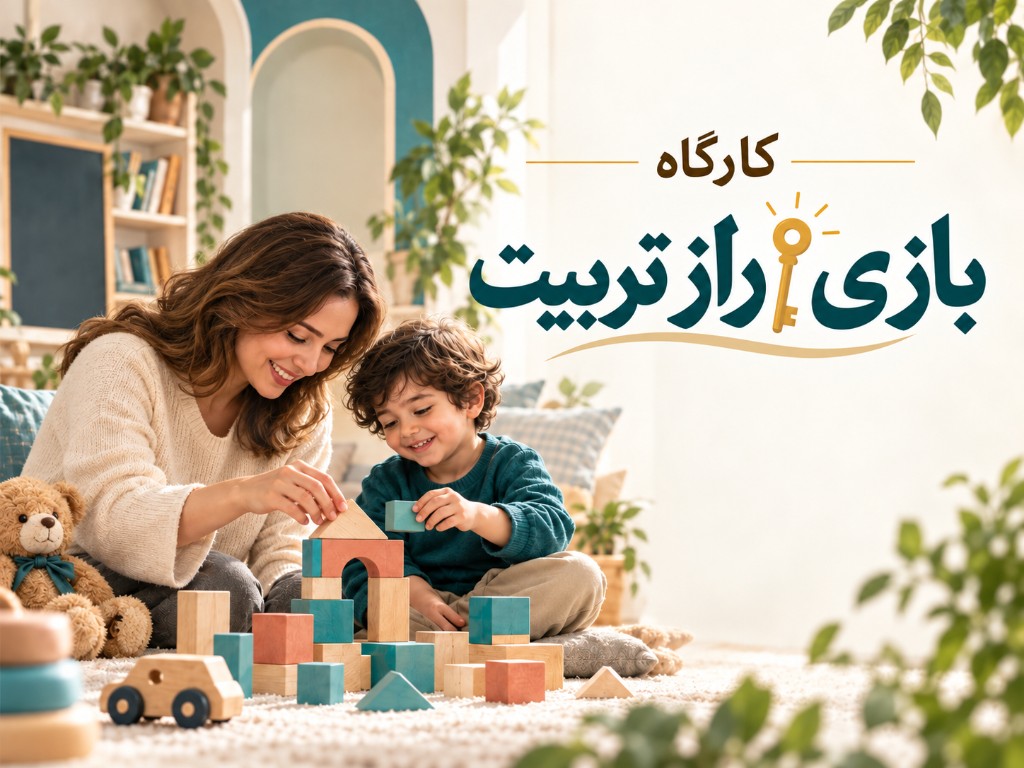
Turn play from simple fun into a language of connection, growth, and parenting — with 60+ purposeful games.
Reviews & comments
No comments yet. Be the first to share your experience.