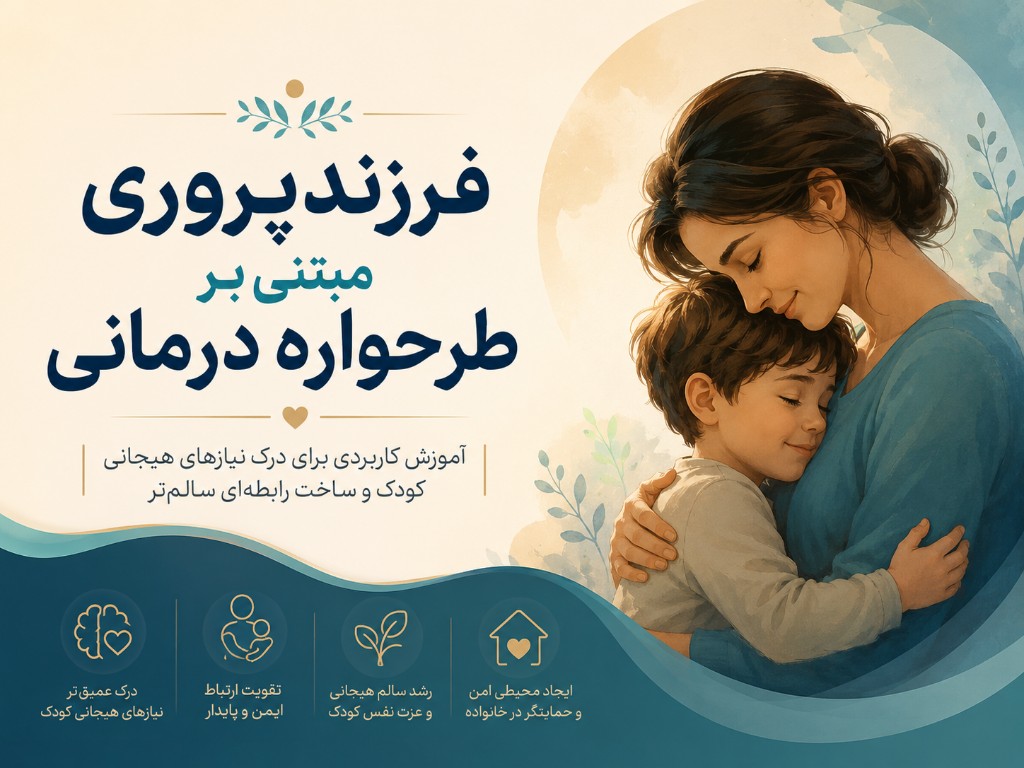
 Educational course
Schema-Based Parenting
Do not only manage your child’s behavior; understand their inner world, psychological needs, and the ground from which life traps can form.

Turn play from simple fun into a language of connection, growth, and parenting — with 60+ purposeful games.
As of today (October 2, 2026), 130 people have enrolled in this course.
As of today (October 2, 2026), 130 people have enrolled in this course.
Back-to-school gift
Until 15 Mehr 1405: a free 20-minute call with the course instructor for everyone who enrolls.
5 days and 18 hours left
An investment in a deeper connection with your child
Current price: $18.99
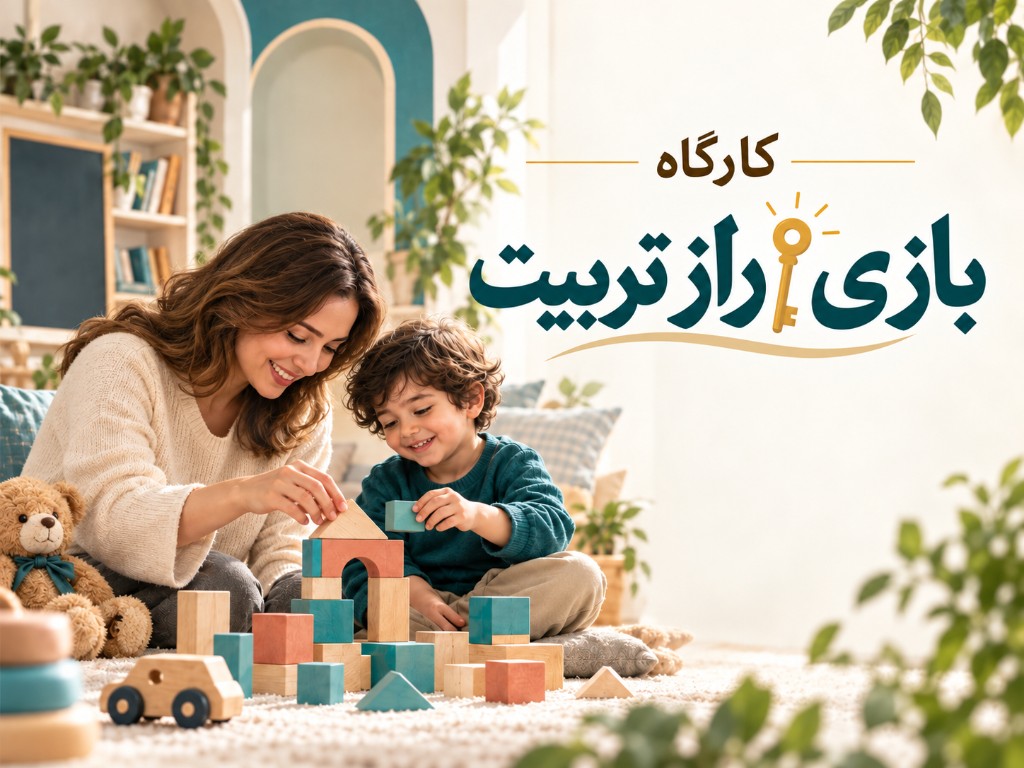
Workshop
How can we use play not only to entertain our child, but as a language of connection, growth, and parenting?
Sometimes we talk for hours — explain, advise, remind, reward, or punish — yet still feel our words do not reach them.
Maybe the issue is that we are speaking our language, not theirs.
A child’s primary language is play.
In play, a child is not only having fun. They express feelings, experience relationship, discover abilities, practice success and failure, learn rules and limits, and gradually build a picture of themselves and the world.
In this course you will learn to see play more consciously and turn simple everyday moments into opportunities for deeper connection and healthier development.
Why does my child get angry so quickly?
How can I help them tolerate hearing “no”?
How do I build confidence and independence?
Why can’t they name what they feel when upset?
How do I teach limits without constant lectures or fights?
Which games suit my child?
Is every game good for every child?
And perhaps most importantly:
How do I build a relationship where my child feels safe, grows independent, can express feelings, and still learns boundaries?
You may know dozens of games — but without understanding temperament, needs, developmental stage, and how to play well, even a good game may not give the result you hope for.
That is why this course does not start with games. It starts with knowing the child.
You will explore temperament dimensions such as activity, sensitivity, regularity, approach or withdrawal, adaptability, intensity, persistence, and distractibility — and how to respond through awareness, acceptance, and adjustment.
So instead of asking:
“Why isn’t my child like the others?”
we learn to ask:
“What are my child’s traits, and how can I connect in ways that fit them?”
Then we move to parenting styles, what makes a game appropriate, types of play, and finally linking play to the child’s psychological needs.
What parenting means, attitudes and standards, and the balance of warmth and control.
How positive emotions and noticing a child’s strengths support healthy development.
Temperament dimensions and responding to individual differences.
Different styles and how relationship quality and control differ among them.
What play is, what it does, and its place in parent–child interaction.
Features of good play, types of play, and types of toys.
Secure attachment, independence, reasonable limits, freedom to express feelings and needs, spontaneity and play.
Many examples of games and activities mapped to each psychological need.
The main section explores secure attachment, autonomous functioning, reasonable limits, freedom to express emotions and healthy needs, and spontaneity and play. You will learn games and interactions that meet these needs in healthier ways — turning play from simple entertainment into a relational and educational tool.
Healthy development requires stable love, empathy, support, closeness, acceptance, and safety. Secure attachment is linked to self-esteem, emotional security, healthy relationships, and emotional intelligence. You will discover games that create more closeness, attention, and connection between parent and child.
Independence is not only doing tasks without help. Autonomous functioning connects to competence, mastery, identity, responsibility, decision-making, and being independent while still connected. Games in this section support confidence and responsible independence.
Love without limits is not enough. Children need reasonable limits: cooperation, rule-following, self-control, impulse management, empathy, respect, and accepting “no”. You will learn to bring turn-taking, rules, patience, cooperation, and limits into play instead of long lectures.
Some children get angry but cannot say why; some hide fear; some cannot say no or ask for what they need. This section covers expressing feelings and needs without fear of rejection, assertiveness, saying no, and asking clearly. Games include feeling masks, sensory play, stick-figure and cloud drawing, emotion role-play, finger codes, and more.
Children do not grow only to behave well, study, or follow rules — they need joy, humor, flexibility, imagination, and room to live. Spontaneity and play connect to optimism, flexible standards, kindness toward mistakes, and enjoying life. Games include feeling boxes, trait scales, creative drama, fortune-teller games, and many others.
By the end, your question will not be only “which game should I play?” You will learn to ask first:
Good play fits temperament and context, age and abilities, and interests — and is safe, well-timed, rich, and as non-competitive as possible.
Because the most important parenting moments often do not look like “parenting” at all.
In all these moments, something is being built that hours of lecturing may never build.

Fatima Ashna
Fatima Ashna is an ISST-certified schema therapist.
For over a decade she has worked with individuals, couples, and parents, and creates educational psychological resources.
As both therapist and mother, she cares deeply about emotionally safe environments for children and adults.
No. Temperament, parenting styles, psychological needs, and play make it useful for parents and professionals who work with children.
Yes. For each psychological need, a set of games is introduced — more than 60 in total.
No. A core lesson is matching games to age, ability, temperament, context, and interests.
No. Before games, you study parenting foundations, temperament, parenting styles, and core psychological needs.
5 days and 18 hours left
Enroll by 15 Mehr 1405 and receive a free 20-minute call with the instructor to discuss your child’s needs and find the best way forward.
Sessions are limited; earlier enrollments are scheduled first.
After purchase, our team will contact you within 48 hours to arrange your session.
The Secret of Parenting Through Play
Sometimes the most important parenting moments do not look like “parenting” at all.
If you want play to be your language of connection, growth, and parenting, this course is your path.
Educational courseDo not only manage your child’s behavior; understand their inner world, psychological needs, and the ground from which life traps can form.
 Educational course
A path to deeper self-knowledge — emotional needs, schemas, coping styles, and inner modes with Fatima Ashna.
 Educational course
A comprehensive self-help course for healing maladaptive schemas and strengthening your healthy adult — with Fatima Ashna.
Reviews & comments
No comments yet. Be the first to share your experience.