
Schema Therapy
What Is Schema Therapy? A Clear Guide to Schemas, Modes, and Change
August 29, 2026 · Reading Time: 11 min
Learn what schema therapy is, how schemas and modes work, what happens in sessions, who it may help, and what current evidence can—and cannot—show.
What Schema Therapy Is Designed to Change
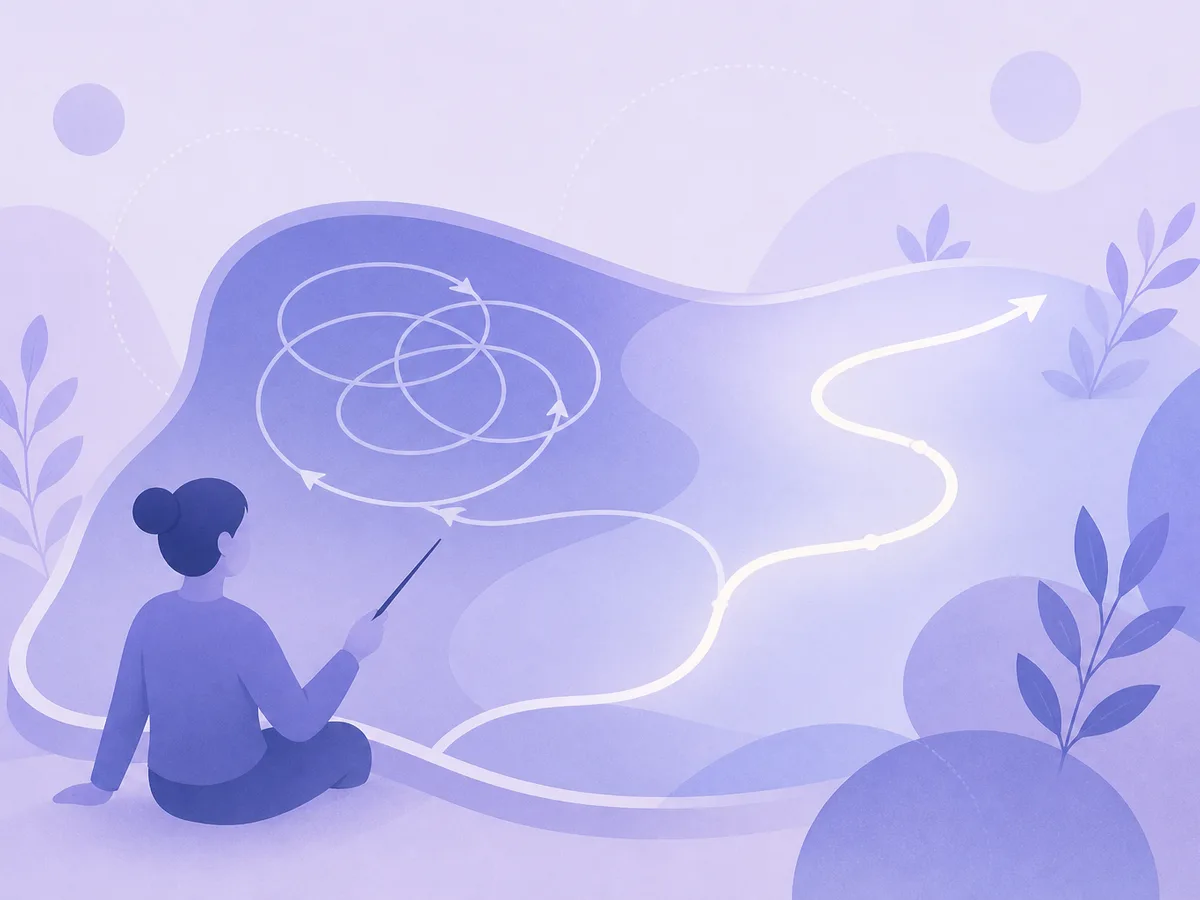
Insight does not always produce change. You may understand that a delayed reply does not prove a relationship is ending, yet your body reacts as if abandonment is already underway. You may know that one mistake does not make you a failure, while an internal voice still turns the mistake into a verdict on your worth. Or you may promise yourself that you will express your needs, only to abandon them again when someone else becomes disappointed.
Schema therapy is an integrative form of psychotherapy developed to understand and change persistent patterns like these. It does not look only at the thought that appeared in a particular moment. It also asks: What old emotional theme did this moment activate? Which part of you moved to the foreground? How did you try to protect yourself? What core need became difficult to recognize or meet? And what would a healthier response look like in your life now?
Schema therapy was designed especially for longstanding and complex difficulties, including patterns involving relationships, self-worth, emotion regulation, and personality functioning. That does not mean every recurring problem requires schema therapy or indicates a mental disorder. Whether the approach fits depends on a careful assessment, the person’s goals and preferences, the nature of the problem, and the clinician’s competence.
Where Did Schema Therapy Come From?
Jeffrey Young and colleagues developed schema therapy from the cognitive-behavioral tradition, then expanded the model for problems that were not always adequately addressed by short-term cognitive work alone. The approach integrates cognitive and behavioral methods with attachment theory, developmental perspectives, experiential and emotion-focused techniques, Gestalt methods, and an explicit use of the therapeutic relationship.
This integration responds to a familiar clinical gap: a person may understand an alternative thought intellectually but still feel small, alone, ashamed, threatened, or fundamentally defective in emotionally charged moments. Knowing “this belief is not completely accurate” is different from being able to feel and act differently when the pattern is activated. Schema therapy works across cognitive, emotional, relational, and behavioral levels to help close that gap.
The Four-Part Map of Schema Therapy
You do not need to memorize all 18 early maladaptive schemas or a long list of schema modes to understand the model. Four ideas provide a useful starting map: core emotional needs, schemas, coping responses, and modes.
Core Emotional Needs
Schema therapy proposes that people develop with several broad emotional needs: secure and stable attachment, autonomy and a sense of competence, freedom to express valid emotions and needs, spontaneity and play, and realistic limits.
The model does not require perfect parenting. No caregiver meets every need in every moment. What matters is the interaction among repeated experiences, intensity, the child’s temperament, the wider environment, and the presence or absence of repairing relationships. Therapy is not a search for someone to blame. It asks how an unmet or poorly met need may still be trying to speak through withdrawal, perfectionism, angry protest, people-pleasing, or emotional detachment today.
Early Maladaptive Schemas
An early maladaptive schema is a broad, persistent pattern involving memories, emotions, bodily meanings, beliefs, and expectations about oneself and relationships. A person may expect important people to leave — the theme explored in the abandonment schema — that emotional needs will go unanswered, as in emotional deprivation, anticipate exploitation, or experience personal worth as conditional on flawless performance.
Schemas are not active all the time. A relevant situation can trigger one quickly, and the old meaning may then feel more like reality than an interpretation. Attention and memory can become organized around confirming the schema, while contradictory information receives less weight. The article Why the Same Emotional Patterns Keep Repeating explains this trigger–meaning–response loop in more detail.
Coping Responses
People generally cope with schema pain through three broad pathways.
Surrender: living as though the schema’s message is true—for example, remaining in relationships where one’s needs are repeatedly dismissed.
Avoidance: staying away from situations, relationships, feelings, or memories that may activate the schema—for example, limiting intimacy or keeping constantly busy.
Overcompensation: moving forcefully in the opposite direction to avoid ever feeling the underlying pain—for example, becoming controlling or dominant to escape vulnerability.
These responses did not appear for no reason. At some point, they may have made painful experiences more manageable. Understanding their protective function does not excuse harmful behavior. It allows a person to take responsibility without turning that responsibility into self-attack.
Schema Modes
Schema modes are moment-to-moment states: temporary organizations of emotion, thought, body response, and behavior. A Vulnerable Child mode may become frightened, a Punitive Parent mode may attack, and a coping mode may then withdraw, appease, numb, or control.
A mode is not a personality label. People shift among states, and therapy aims to strengthen the capacity often called the Healthy Adult mode. For a fuller map, read Schema Modes: A Clear Map of Inner States.
What Is the Goal of Schema Therapy?
The goal is not to erase memories, eliminate painful emotions, or make a person independent of all needs. Instead, schema therapy aims to help people notice schemas and modes earlier; reduce the power of punitive or relentlessly demanding inner voices; care for vulnerable emotional states without becoming governed by them; rely less on coping responses that create new problems; distinguish present evidence from an old expectation; communicate needs more directly and responsibly; set realistic limits; and choose behaviors that support connection, autonomy, and personally meaningful values.
The Healthy Adult is not a permanently calm or perfectly rational self. Healthy Adults experience fear, anger, grief, longing, and uncertainty. The difference is their increasing ability to acknowledge the emotion, examine reality, protect boundaries, and choose the next action with more awareness.
What Happens in Schema Therapy Sessions?
Treatment is individualized, but it usually includes several interconnected processes.
Assessment and a Shared Case Map
The therapist asks about current problems, triggers, important relationships, developmental experiences, coping patterns, and treatment goals. Schema and mode questionnaires may support assessment, but a score is not a diagnosis or a final truth about the person.
Therapist and client then build a shared formulation: What situations activate the pattern? What emotion and need are underneath it? Which internal voices appear? How does the person usually protect themselves? A useful formulation is understandable and collaborative, not a private theory known only to the therapist.
If you want an initial self-reflection tool, the Schema Questionnaire may offer a starting point. It does not replace a clinical assessment.
Observable Treatment Goals
The goal is not merely to lower a schema score. Progress should become visible in daily life: expressing a need without attacking, recovering from a mistake without humiliation, leaving an unsafe pattern rather than staying solely from fear of being alone, or returning to a difficult conversation at an agreed time instead of disappearing.
Cognitive Work
Cognitive methods help separate a schema message from established fact. The therapist and client examine evidence, notice how attention and memory may be biased toward the old conclusion, and develop a more balanced Healthy Adult perspective. This is not simply positive thinking. A useful alternative statement must recognize the emotion and fit current evidence. “Nothing is wrong; you are overreacting” dismisses the vulnerable state. “This delay frightened you, and we do not yet know what it means” combines emotional recognition with reality testing.
Experiential and Emotion-Focused Work
Some patterns do not shift through discussion alone. Imagery rescripting and chairwork can help a person contact active emotions, needs, and internal voices more directly. In chairwork, for example, the Vulnerable Child, a Punitive Parent voice, a Detached Protector, and the Healthy Adult may each be given space to speak and respond.
Experiential work is not intended to erase memory or prove exactly what happened in the past. Its purpose is to process emotional meaning and develop a healthier response in the present. Timing and intensity should be adapted to the person’s stability and capacity; emotional flooding is not a treatment goal.
Behavioral Pattern-Breaking
Insight gains power when it enters real behavior. A client may practice making a clear request, setting a limit, tolerating healthy distance, stopping relationship “tests,” or taking a step previously avoided because failure felt unbearable. Change is usually built through repeated, manageable actions rather than one dramatic decision. Small Steps Toward Meaningful Change develops this idea further.
The Therapeutic Relationship and Limited Reparenting
In schema therapy, the therapeutic relationship is not merely the setting in which techniques happen. Within professional and ethical boundaries, the therapist aims to offer a stable, empathic, honest, and appropriately boundaried relationship.
“Limited reparenting” does not mean that the therapist becomes a replacement parent or partner. It means that core emotional needs are recognized within the therapeutic relationship while real limits, autonomy, and the client’s responsibility remain intact. The therapist may use empathic confrontation: understanding why a response developed while also naming how a present behavior harms the client or other people.
Who May Benefit From Schema Therapy?
Schema therapy was initially developed for chronic difficulties and personality disorders, particularly borderline personality disorder (BPD). The strongest evidence base remains in personality disorders. A 2023 systematic review and meta-analysis reported promising effects on personality-disorder symptoms, schemas, and quality of life, although study quality and findings vary across diagnoses and treatment formats.
Schema therapy has also been studied and used for recurrent or chronic depression, some anxiety presentations, eating disorders, and persistent interpersonal problems. Evidence outside personality disorders is not equally developed. A systematic review examining schema and symptom change described findings as encouraging while emphasizing that rigorous evidence for several non-personality-disorder applications remained limited.
It may be worth considering schema therapy when the same problem returns in different forms; the person understands the pattern intellectually but struggles to change in emotionally activated moments; relationships, self-worth, or emotion regulation are persistently affected; avoidance, surrender, compulsive caretaking, or overcontrol repeatedly take over; or earlier treatment reduced some symptoms while the central pattern remained active.
Treatment choice should include careful assessment, informed client preference, therapist competence, and consideration of other evidence-based options.
Schema Therapy vs CBT: What Is the Difference?
Schema therapy is not opposed to cognitive behavioral therapy. It developed within the broader CBT tradition and continues to use cognitive and behavioral methods. The differences are mainly in scope and emphasis.
Many standard CBT treatments focus on current symptoms, thoughts, behaviors, and specific skills, often within a structured and relatively time-limited protocol. Schema therapy tends to spend more time on persistent developmental themes, emotional needs, modes, experiential work, and the therapeutic relationship when longstanding patterns are the main concern.
It is misleading to reduce the comparison to “surface versus depth.” CBT is a broad family of therapies with substantial evidence across many conditions, and modern CBT approaches can include emotional, developmental, and relational work. The appropriate treatment depends on the person and problem—not on a claim that one model is always deeper or better.
How Long Does Schema Therapy Take?
There is no single duration. Treatment for complex personality difficulties may continue for a year or longer, while some group protocols and focused applications are shorter. Severity, goals, co-occurring problems, session frequency, and individual versus group format all affect length.
Therapist and client should discuss an initial estimate, observable signs of progress, cost, and planned review points. Long treatment is not automatically profound, and brief treatment is not automatically superficial. The more useful question is whether therapy has a clear formulation, monitors progress, and produces meaningful change in the person’s life.
What Schema Therapy Is Not
It is not a method for diagnosing friends, partners, or family members. It does not require blaming parents for every current problem. It does not mean labeling every strong feeling a “Vulnerable Child” or every disagreement a schema activation. Its goal is not to eliminate anger, grief, fear, or dependency needs. A schema questionnaire is not a stand-alone diagnostic tool. Experiential techniques should not be used to impose a therapist’s interpretation or certify memory as fact. A warm therapeutic relationship does not remove professional boundaries.
These cautions matter because psychological language can become a new form of criticism: “You are in Child mode,” “Everything you do is your schema,” or “I am not responsible because my schema was triggered.” A therapeutic map should expand choice, not reduce a person to another label.
A Short Exercise: Map One Repeating Moment
Choose a recent situation in which your reaction felt more intense—or more familiar—than you expected. Write five lines. Trigger: What observable event occurred? Schema message: What meaning did your mind create immediately? Active mode: Which state came forward—frightened, angry, critical, detached, appeasing, or controlling? Coping response: Did you surrender, avoid, or overcompensate? Healthy Adult response: What sentence and action would recognize the feeling while remaining aligned with present evidence?
This is not a self-diagnostic test. Its purpose is to slow down a loop that usually moves very quickly. If the exercise activates overwhelming emotion or difficult memories, you do not need to continue it alone.
Frequently Asked Questions About Schema Therapy
Is schema therapy only for personality disorders? No. It was developed for chronic difficulties and personality disorders, and its strongest evidence remains in that area. It has also been studied and used for depression, anxiety, eating disorders, and persistent relationship patterns, but the evidence is not equally strong for every application.
Does everyone have all 18 schemas? The model describes 18 early maladaptive schemas, but their intensity and combinations vary. A questionnaire score alone does not determine whether a person “has” or “does not have” a schema. Context, persistence, activation, and impact on life matter.
Is schema therapy emotionally difficult? Working with shame, loneliness, anger, or painful memories can be distressing. Good therapy should not push a client into overwhelming emotion without preparation. The therapist should adjust pacing and technique, support regulation, and leave enough time to return to the present.
Can schema therapy be done online? Assessment, formulation, cognitive work, and some experiential methods can be adapted to online sessions. Suitability depends on privacy, internet stability, symptom severity, safety, and the person’s ability to regulate between sessions. In-person care or local support may be more appropriate for some people or acute situations.
How do I find a qualified schema therapist? Ask about the clinician’s professional qualification and legal authorization where they practice, specific schema-therapy training, experience with your concern, and method for reviewing progress. Your ability to discuss discomfort or disagreement with the therapist also matters. No credential alone replaces ethical practice, clinical fit, and a workable therapeutic relationship.
Further Reading
Young, J. E., Klosko, J. S., & Weishaar, M. E. (2003). Schema Therapy: A Practitioner’s Guide. Guilford Press.
International Society of Schema Therapy. Schema Therapy Central Concepts. https://www.schematherapysociety.org/Schema-Therapy/Schema-Questionnaires
Taylor, C. D. J., Bee, P., & Haddock, G. (2017). Does schema therapy change schemas and symptoms? A systematic review across mental health disorders. Psychology and Psychotherapy, 90(3), 456–479. https://doi.org/10.1111/papt.12112
Zhang, K., Hu, X., Ma, L., et al. (2023). The efficacy of schema therapy for personality disorders: A systematic review and meta-analysis. Nordic Journal of Psychiatry, 77(7), 641–650. https://doi.org/10.1080/08039488.2023.2228304
Arntz, A., Jacob, G. A., Lee, C. W., et al. (2022). Effectiveness of predominantly group schema therapy and combined individual and group schema therapy for borderline personality disorder: A randomized clinical trial. JAMA Psychiatry, 79(4), 287–299. https://doi.org/10.1001/jamapsychiatry.2022.0010
Wibbelink, C. J. M., Kamphuis, J. H., Sinnaeve, R., et al. (2026). Dialectical behavior therapy vs schema therapy for patients with borderline personality disorder: The BOOTS multicenter randomized clinical trial. JAMA Psychiatry, 83(7), 669–681. https://doi.org/10.1001/jamapsychiatry.2026.0418
The value of this map is not in giving people more labels. It is in noticing earlier what has been activated, and making a different choice now.
A Closing Reflection
Schema therapy is an integrative approach to understanding and changing persistent emotional, cognitive, relational, and behavioral patterns. It works with four central elements: core emotional needs, early maladaptive schemas, coping responses, and moment-to-moment modes. Treatment combines cognitive, experiential, relational, and behavioral methods rather than relying on insight alone. Change becomes more grounded when vulnerable states receive care and responsibility for behavior remains with the Healthy Adult.
Reviews & comments
No comments yet. Be the first to share your experience.